
- Welcome to APIKRI
- Call Us: (+62) 852 9226 5523
- Sabtu Wage, 24 Oktober 2026

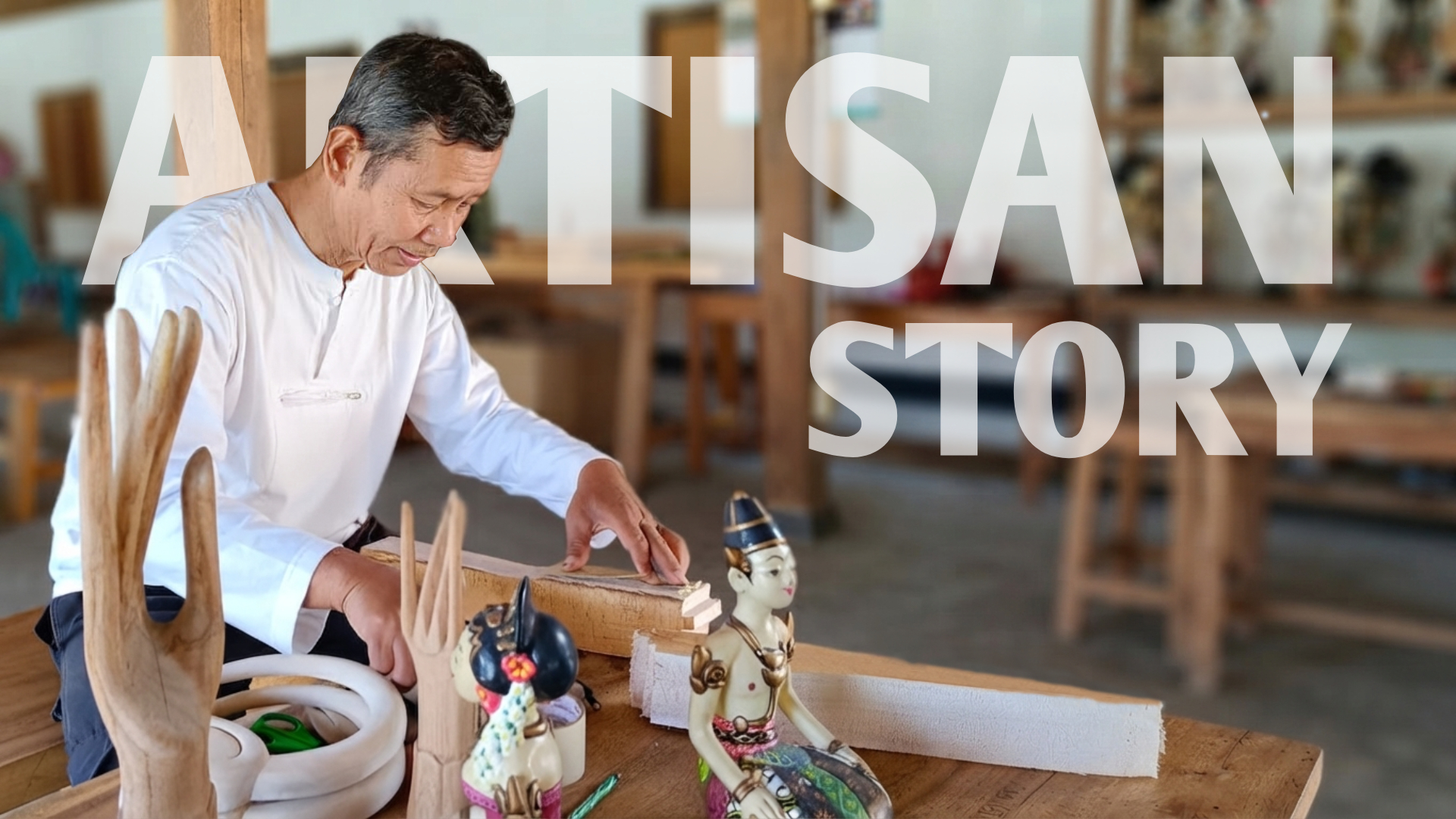
Kemiskidi, affectionately known as Pak Kemis, was born in Krebet, Bantul, on January 14, 1962. Raised by parents who worked as subsistence farmers, his early life was shaped by economic challenges, yet always fueled by great ambition.
Pak Kemis began his entrepreneurial and creative journey during his teenage years. In 1975, while still in school, he met Mbah Warno, a master wood craftsman from Jepara who resided in Bantul. Driven by a deep eagerness to learn, Pak Kemis routinely walked five kilometers after school to reach Pak Warno’s workshop. At the time, infrastructure was highly limited, forcing him to cross a river daily to reach his mentor. Under Pak Warno's guidance, he mastered the art of making wooden masks and other traditional crafts.
After graduating from high school, unstable economic conditions and unpredictable harvest yields motivated Pak Kemis to work even harder. While continuing to assist Mbah Warno, he also began producing and selling his own wooden masks. Using his bicycle, he pedals around Bantul, Prawirotaman and many place to market his creations.
A major milestone occurred in 1988 when Pak Kemis, alongside his brother and friends, founded a workshop named "Omah Batik Kayu: Sanggar Peni." Initially, he produced masks exclusively for traditional dancers. However, he soon innovated by expanding his product line to include wooden puppets (wayang), kitchenware, and home decor, uniquely finished with intricate batik motifs. His innovative wooden batik pieces grew highly popular and eventually became the cultural icon of Krebet. Through his efforts, Krebet—a village that once relied solely on unpredictable agriculture—transformed into a thriving handicraft center. Collaborating with a community of artisans, Pak Kemis continuously pushed the boundaries of wooden batik innovation.
To scale up production and reach a global market, Pak Kemis joined APIKRI, a fair trade organization then affiliated with IFAT (International Federation for Alternative Trade). This partnership opened new horizons, international markets became the workshop’s largest revenue source. Supported by APIKRI, Pak Kemis regularly participated in local and international trade exhibitions, while receiving valuable assistance in product design innovation and global marketing strategies.
As international orders surged, Pak Kemis began training and employing his neighbors and relatives. What started with just one or two assistants quickly multiplied to meet large-scale orders that sometimes reached tens of thousands of pieces. Armed with the skills taught by Pak Kemis, many of his former artisans eventually established their own independent workshops, further solidifying Krebet's reputation as a renowned wooden batik tourism village. Recognizing his dedication, APIKRI members elected Pak Kemis to the executive board in 2002, and he later served as the Chairman of the APIKRI Board from 2018 to 2023.
To date, Sanggar Peni employs 15 dedicated artisans. The workforce is thoughtfully structured by expertise: female artisans specialize in the intricate batik waxing and dyeing processes, while male artisans focus on the woodcarving and shaping phase (putihan).
Beyond running a successful business, Pak Kemis and his team actively promote wooden batik across various regions and provide free training workshops to community groups in Bantul. His craftsmanship has not only elevated his family's livelihood—enabling him to put his five children through university—but has also revitalized his entire community. His expertise is widely recognized, leading to frequent invitations as a guest lecturer in the Wood Craft Department at the Indonesian Institute of the Arts (ISI) Yogyakarta.
Today, the masterfully crafted products of Krebet artisans grace the global handicraft market, attracting international visitors eager to learn about this unique cultural heritage. Pak Kemis stands as a prime exemplar of an APIKRI artisan who successfully integrates Fair Trade principles into his business model. He consistently practices transparency and accountability, prioritizes community capacity building, implements down-payment systems for non-APIKRI buyers, and ensures fair wage distribution for all his artisans.